×

Human Interleukin-1 beta (IL1B) ELISA Kit

  • Cat.No.: AE58504HU

  • Reactivity: Human (Homo sapiens)

To Purchase AE58504HU

Size:
48T 96T
Price: Inquire

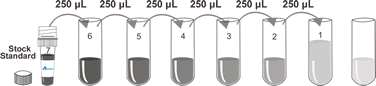
Reagent Preparation


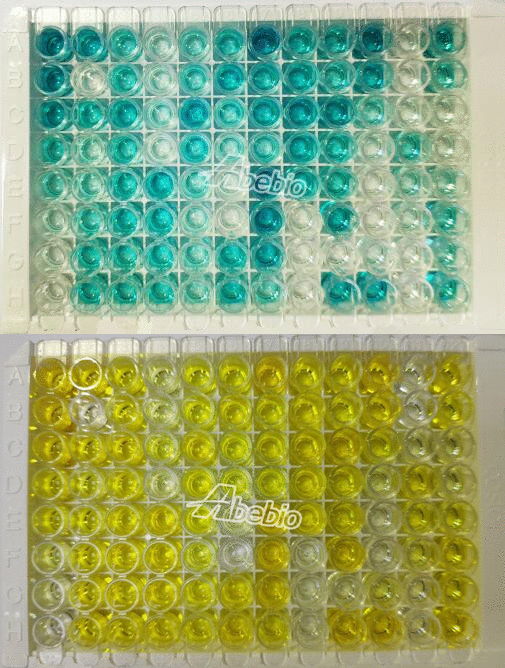
Results demonstration


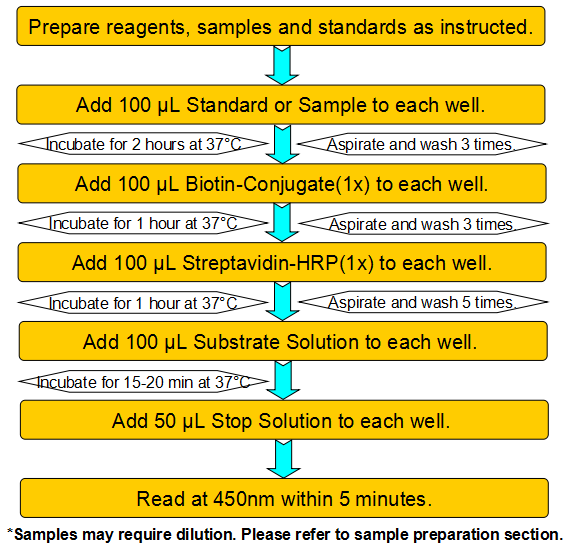
Assay Procedure Summary


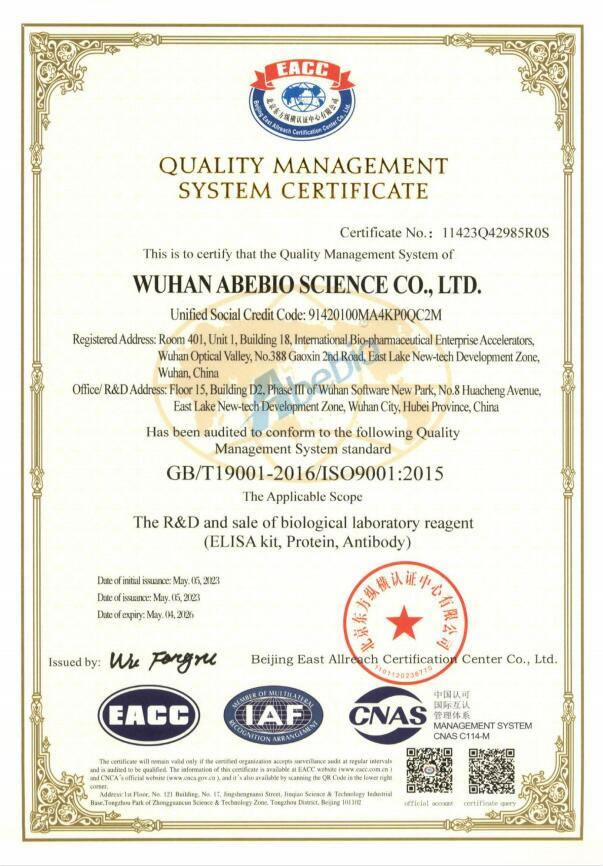
Certificate


Product Details

Species Reactivity Human (Homo sapiens)
UniProt P01584
Abbreviation IL1B
Alternative Names IL-1; IL1-BETA; IL1F2; catabolin|preinterleukin 1 beta|pro-interleukin-1-beta
Range 125-8000 pg/mL
Sensitivity 62.5 pg/mL
Sample Type Serum, Plasma, Other biological fluids
Detection Method Sandwich
Analysis Method Quantitive
Assay Duration 1-4.5h
Sample Volume 1-200 μL
Detection Wavelengt 450 nm

Test principle

This assay employs a two-site sandwich ELISA to quantitate IL1B in samples. An antibody specific for IL1B has been pre-coated onto a microplate. Standards and samples are pipetted into the wells and any IL1B present is bound by the immobilized antibody. After removing any unbound substances, a biotin-conjugated antibody specific for IL1B is added to the wells. After washing, Streptavidin conjugated Horseradish Peroxidase (HRP) is added to the wells. Following a wash to remove any unbound avidin-enzyme reagent, a substrate solution is added to the wells and color develops in proportion to the amount of IL1B bound in the initial step. The color development is stopped and the intensity of the color is measured.
 

Product Overview

Interleukin-1 (IL-1) is one of the first cytokines ever described. Its initial discovery was as a factor that could induce fever, control lymphocytes, increase the number of bone marrow cells and cause degeneration of bone joints. At this time, IL-1 was known under several other names including endogenous pyrogen, lymphocyte activating factor, haemopoetin-1 and mononuclear cell factor, amongst others. It was around 1984-1985 when scientists confirmed that IL-1 was actually composed of two distinct proteins, now called IL-1
 

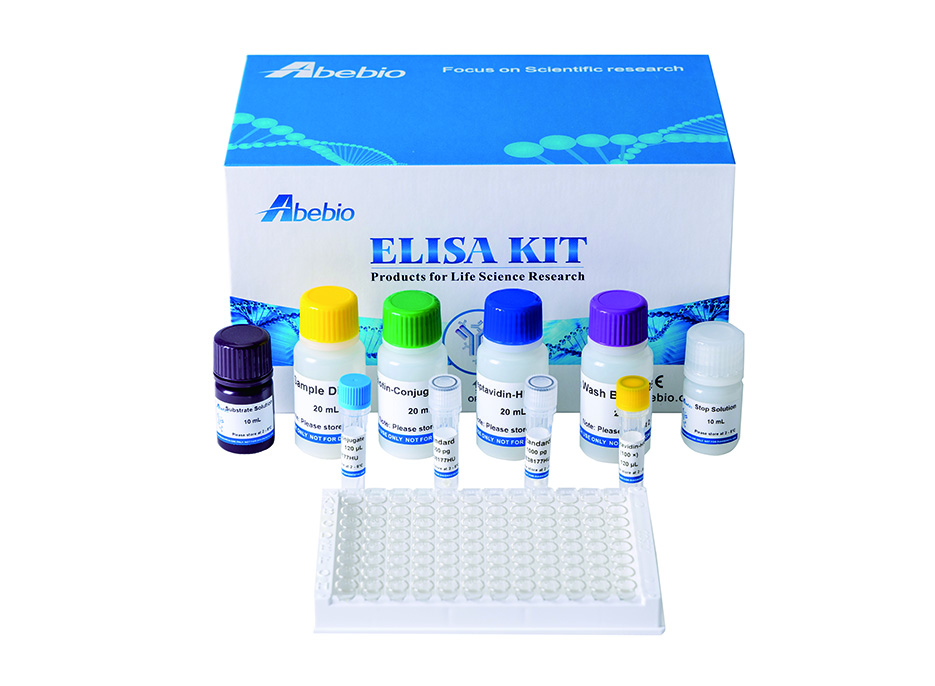
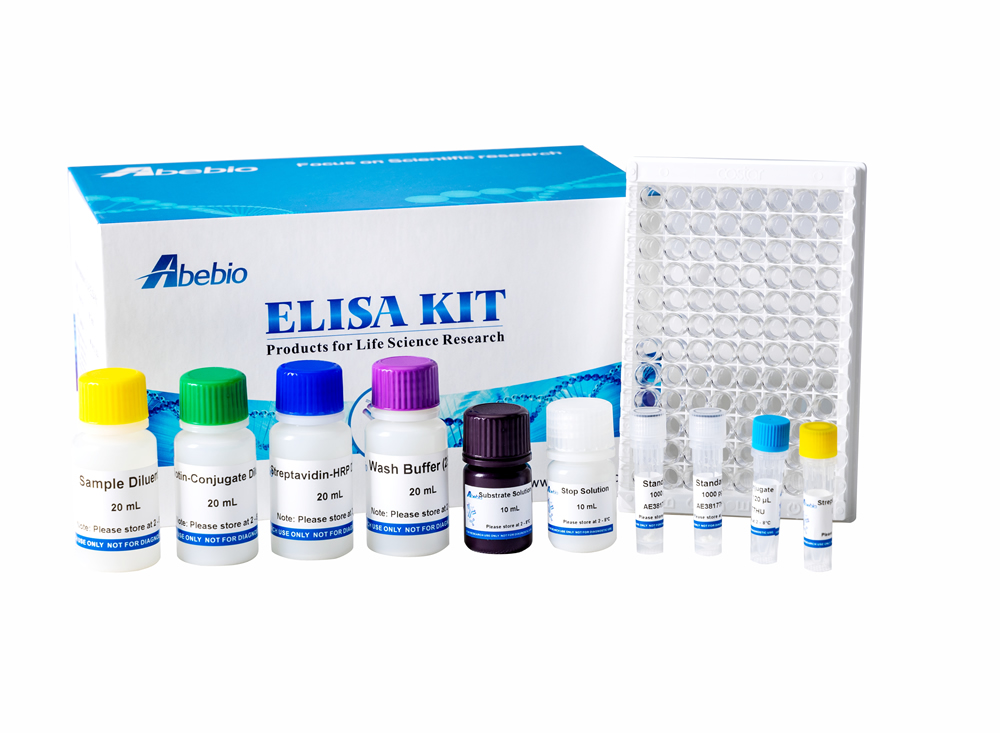
Components


Reagents

Quantity

Reagents

Quantity

Assay plate (96 Wells)

1

Instruction manual

1

Standard (lyophilized)

2

Sample Diluent

1 x 20 mL

Biotin-Conjugate (concentrate 100 x)

1 x 120 μL

Biotin-Conjugate Diluent

1 x 12 mL

Streptavidin-HRP  (concentrate 100 x)

1 x 120 μL

Streptavidin-HRP Diluent   

1 x 12 mL

Wash Buffer (concentrate 25 x)

1 x 20 mL

Substrate Solution

1 x 10 mL

Stop Solution

1 x 6 mL

Adhesive Films

4


Specificity

This assay has high sensitivity and excellent specificity for detection of Human IL1B. No significant cross-reactivity or interference between Human IL1B and analogues was observed.


Recovery

Matrices listed below were spiked with certain level of recombinant Human IL1B and the recovery rates were calculated by comparing the measured value to the expected amount of Human IL1B in samples.


Precision

Intra-assay Precision (Precision within an assay) 
Three samples of known concentration were tested twenty times on one plate to assess intra-assay precision.
Inter-assay Precision (Precision between assays) 
Three samples of known concentration were tested in forty separate assays to assess inter-assay precision.
CV (%) = SD/meanX100
Intra-Assay: CV<8% 
Inter-Assay: CV<12%


Linearity

The linearity of the kit was assayed by testing samples spiked with appropriate concentration of Human IL1B and their serial dilutions. The results were demonstrated by the percentage of calculated concentration to the expected.


Stability

The stability of ELISA kit is determined by the loss rate of activity. The loss rate of this kit is less than 5% within the expiration date under appropriate storage condition. 
The loss rate was determined by accelerated thermal degradation test. Keep the kit at 37°C for 4 and 7 days, and compare O.D.values of the kit kept at 37°C with that of at recommended temperature. (referring from China Biological Products Standard, which was calculated by the Arrhenius equation. For ELISA kit, 4 days storage at 37°C can be considered as 6 months at 2 - 8°C, which means 7 days at 37°C equaling 12 months at 2 - 8°C).


Sample collection and storage

Serum: Use a serum separator tube (SST) and allow samples to clot for two hours at room temperature or overnight at 2 - 8°C before centrifugation for 15 minutes at 1000 × g. Remove serum and assay immediately or aliquot and store samples at ≤ -20°C. Avoid repeated freeze-thaw cycles.
Plasma: Collect plasma using EDTA, or heparin as an anticoagulant. Centrifuge for 15 minutes at 1000 × g at 2 - 8°C within 30 minutes of collection. Assay immediately or aliquot and store samples at ≤ -20°C. Avoid repeated freeze-thaw cycles.
Other biological fluids: Centrifuge samples for 20 minutes at 1000 × g. Remove particulates and assay immediately or store samples in aliquot at -20°C or -80°C. Avoid repeated freeze/thaw cycles.


Kits storage instructions

Store at 2-8°C. Please refer to Instruction Manual.
 
  1. Chelidonine-induced inhibition of FBP1 disrupts M2 macrophage polarization and attenuates breast cancer IF: 8.300
    Chelidonium majus l., a traditional herbal medicine listed in the Pharmacopoeia of China (2025), has remarkable anticancer properties. Chelidonine (CHE), its primary bioactive alkaloid, can inhibit the proliferation of breast cancer (BC) cells; however, whether its antitumor effect in BC is mediated through regulating M2 macrophage polarization remains unexplored.
  2. Roles of TREM2 in degeneration of human nucleus pulposus cells via NF‐κB p65 IF: 2.959
    Nuclear factor (NF)-κB p65 plays a key role in the development of intervertebral disc degeneration (IDD). Herein, we found that messenger RNA levels of human triggering receptor expressed on myeloid cells‐2 (TREM2) and NF‐κB p65 were upregulated and strongly positive correlated (r2 = 0.299, P = 0.0126) in nucleus pulposus (NP) tissues of patients with IDD.